The recent World Medical Innovation Forum on Cancer convened by Partners Healthcare in Boston was attended by leaders in oncology from around the world including top: clinicians, bench scientists, policy leaders, and executives from hospitals and life-science companies. Two plus days of intense discussion and sharing of perspectives ably curated by Partners Innovation head Chris Coburn covered a range of topics from technology developments, to the healthcare system, and the patient/ doctor perspectives.
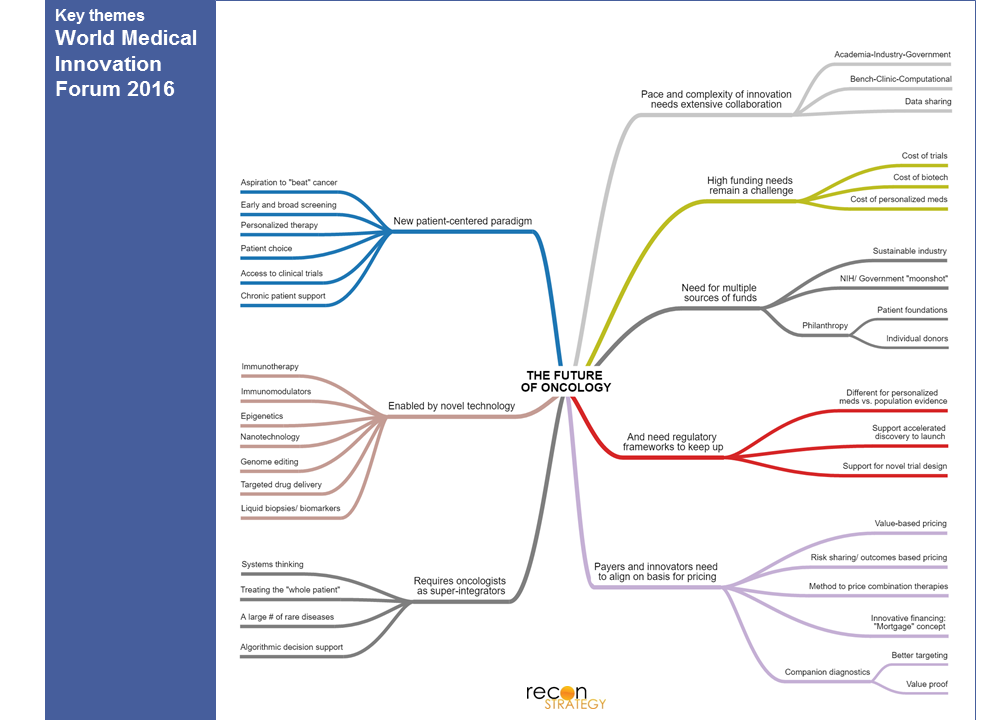
The mind-map below is an attempt to organize the key themes that I heard through the conference and to try to convey why I came away feeling incredibly optimistic about the future of cancer care.
The branches on the left hand side relate to how clinical care will evolve. We will see an increasing focus on patient centered care, incredible advances in life expectancy with cancer thanks to novel technologies, and ever increasing complexity for clinicians.
The branches on the right relate to how the healthcare system will need to evolve to continue to advance the science and best serve the needs of patients and doctors. We need to see more collaboration, continued funding, new regulatory frameworks, and a sustainable economic model.