
A non-profit health information exchange was facing financial struggles and needed a new strategy that would keep it financially sustainable
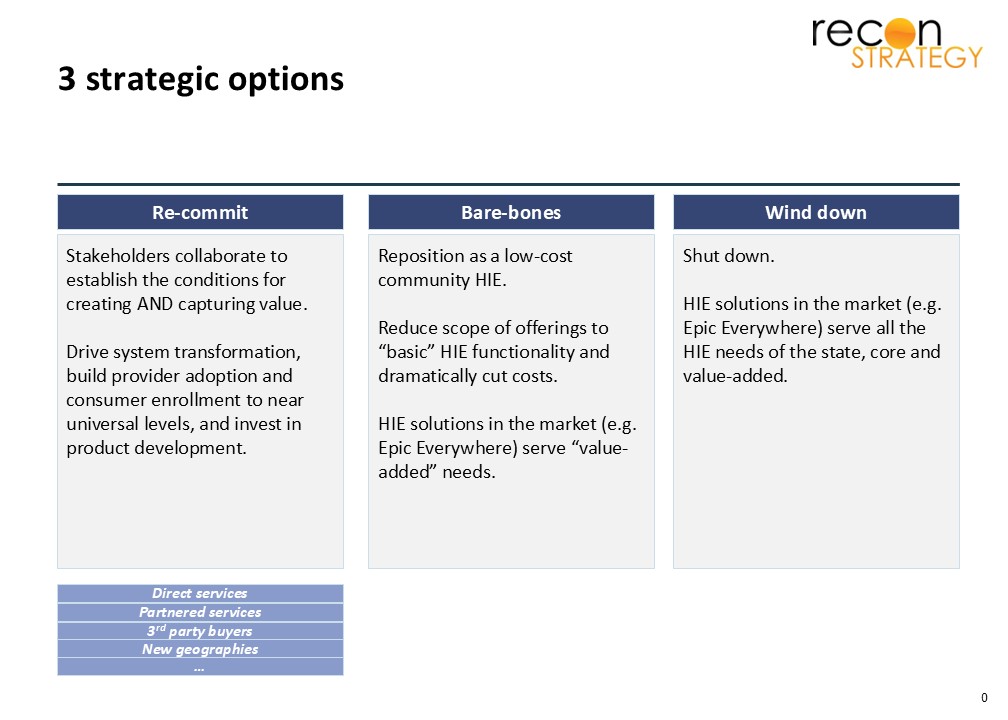
3 strategy options
Situation
Valued statewide service lacked a sustainable business model
A non-profit Health Information Exchange was running out of money
While key stakeholders including the state government, hospital systems, health insurers, and large employers all saw the value of the HIE, there was no agreement on how to fund its operations
Stakeholders would need to commit to a new business model or face signficant downsizing or decide to cease operations
Project
Develop sustainable strategy acceptable to all stakeholders
We conducted deep interviews with leaders from all the key stakeholders and examined ideas from other states and internationally to develop a set of options
We evaluated the acceptability and financial viability of each option and facilitated board discussions to develop a new “hybrid” model that augmented funds from the state and payers with fee income
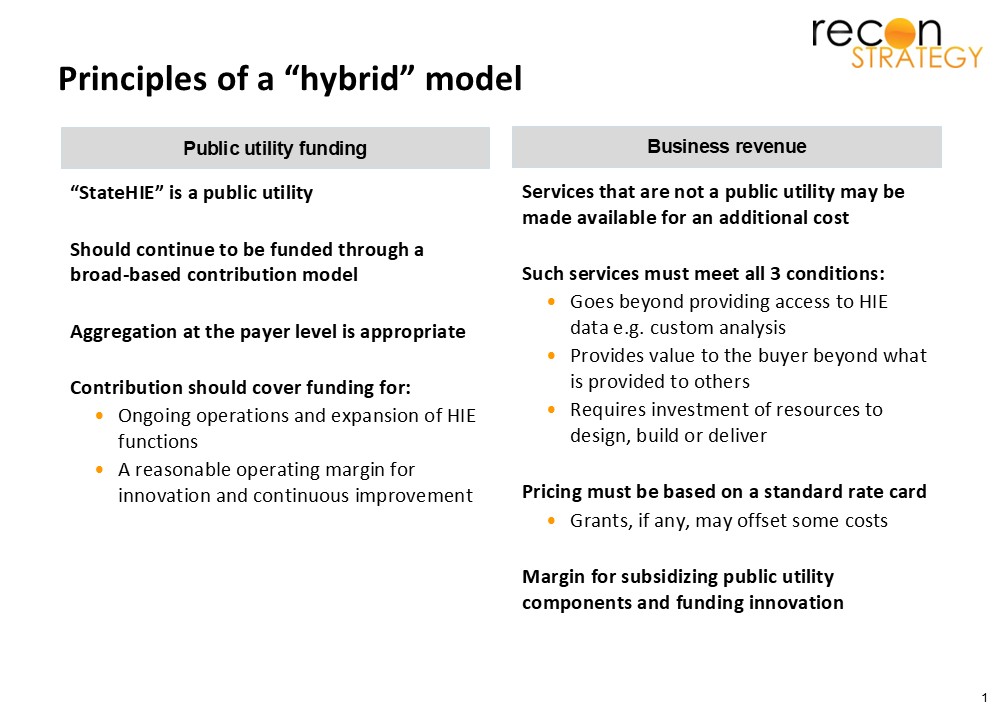
Principles of a "hybrid" model
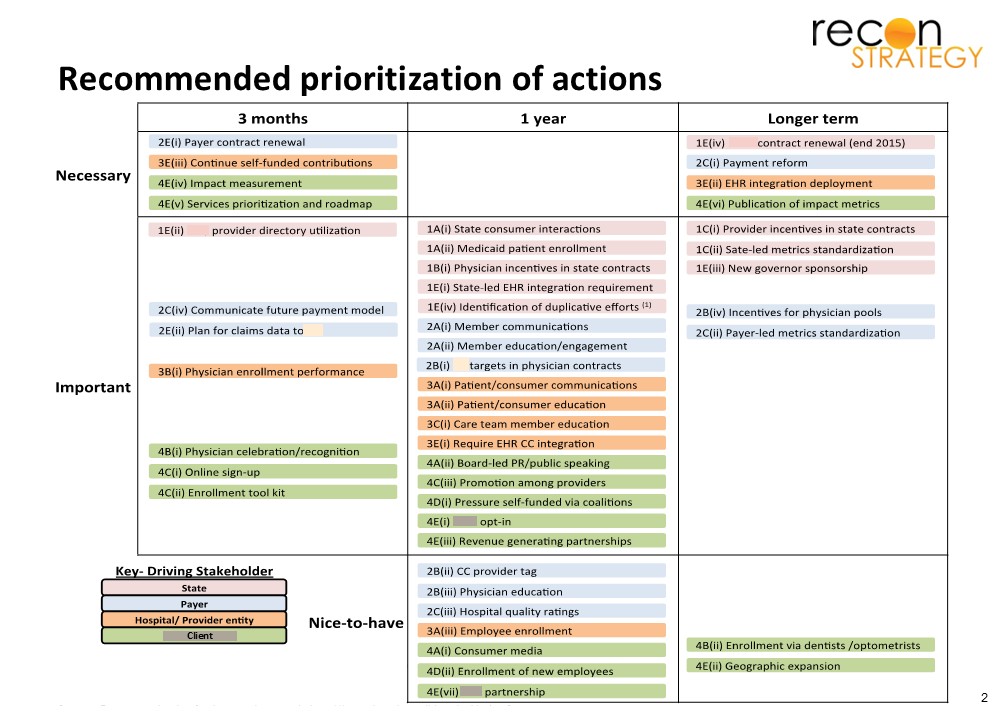
Summary of short and long term priorities
Outcome
Successful transition to new model
The HIE became one of the first in the country to adopt a “hybrid” business model and successfully achieve its goal of providing a public utility service augmented with commercial income for value-added services
We supported the organization with detailed roadmaps to follow through on this strategy
MORE CASE STUDIES
Related work
Post pandemic an innovative diagnostics platform company wanted to dramatically increase its market by targeting retail clinics for its point-of-care diagnostics platform
Growth, product market fit, value proposition
Large university wanting to dramatically increase its clinical research footprint
A direct-to-employer primary care provider had outgrown word-of-mouth selling and its leadership and board disagreed on where the next phase of growth should come from.
Employer segmentation and targeting